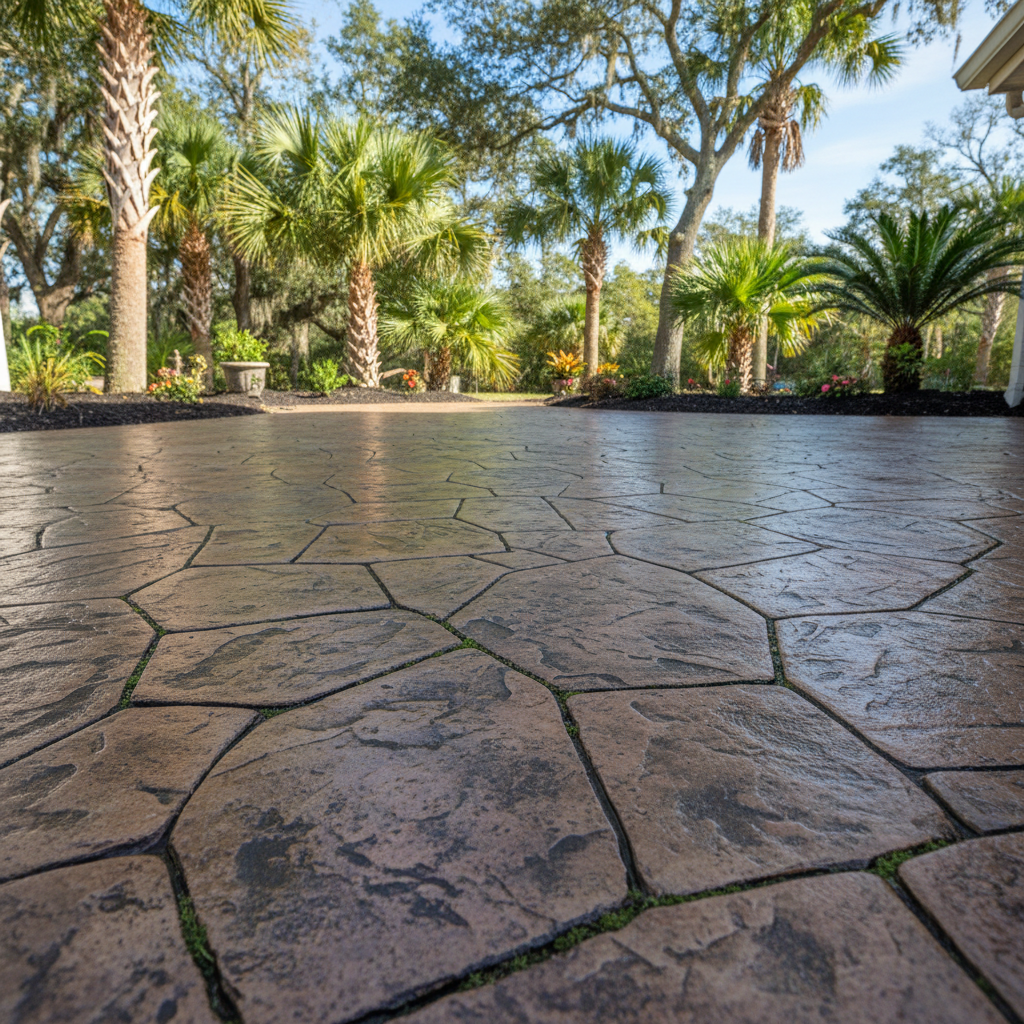
So, you're thinking about stamped concrete? Good choice. It's a fantastic way to get that high-end look of stone, brick, or wood without the crazy cost or upkeep. Around here in Gulfport, I've seen it transform everything from plain driveways in Bayou View to backyard patios in Orange Grove. But before you jump in, there are a few things you really need to know.
Before You Start: Planning Your Stamped Concrete Project
First off, what are you trying to achieve? Stamped concrete isn't just about pouring a slab and pressing a pattern into it. You've got to think about the big picture.
- Design & Pattern: There are tons of patterns out there. Cobblestone, slate, wood plank, brick — you name it. Take a good look at your house's style. If you've got a classic Southern home, a rustic wood plank pattern might look out of place next to a formal brick. Think about how it flows with your existing landscape and architecture. Also, consider the scale. A big, bold pattern might overwhelm a small patio, while a tiny pattern could get lost on a huge driveway.
- Color: This is huge. You don't just pick one color; you're usually looking at a base color and then a release agent color. The base color is what the concrete itself is tinted with, and the release agent adds a secondary, often darker, color that gets into the texture and creates depth. This is where you really mimic natural materials. Get samples! Don't just pick from a brochure. See how the colors look in direct sunlight and in the shade, because it'll change.
- Drainage: This is critical, especially with our Gulf Coast downpours. You absolutely need to make sure the area where you're putting the stamped concrete drains properly. If water sits, it's going to cause problems down the line – cracking, spalling, or just general mess. A good contractor will always factor in proper slope. If you're doing it yourself, don't skip this step.
- Permits: Depending on the size and location of your project, you might need a permit from the city of Gulfport. Don't assume you don't. A quick call to the planning department can save you a lot of headaches later.
DIY or Pro? Knowing Your Limits
Okay, here's where we get real. Can you DIY stamped concrete? Technically, yes. Is it a good idea for most homeowners? Probably not, especially for anything beyond a very small, simple pad.
- When to DIY: If you're pouring a small, non-structural concrete pad (like for a trash can or a small AC unit) and you just want a simple stamp, and you've got experience working with concrete, maybe. You'll need to rent or buy specialized tools: stamps, release agents, color hardeners, floats, edgers, and more. And you'll need to move fast. Concrete waits for no one.
- When to Call a Pro: For anything significant – a driveway, a large patio, a walkway that needs to tie into your home's foundation – call us. Seriously. Stamped concrete is an art and a science. It requires precise timing, skilled application of color and texture, and a crew that knows how to work together. If the concrete sets too fast, you can't stamp it. If it's too wet, the pattern won't hold. If the color isn't applied right, it'll look blotchy. Plus, a pro like New Look Concrete Solutions has all the right tools and the experience to handle Gulfport's humidity and occasional pop-up storms that can mess with setting times. We know the soil conditions here, too, which is a big deal for proper sub-base prep.
During the Project: What to Expect
If you hire a pro, it's pretty straightforward. We'll prep the site, lay down the base, pour the concrete, apply the base color, and then, at just the right moment, apply the release agent and stamp the pattern. It's a dance, really. We'll seal it afterward, which is crucial for protection.
If you're DIYing, you'll be doing all that, plus managing the concrete delivery, making sure you have enough hands on deck, and hoping everything goes perfectly. It's a lot of pressure.
After the Pour: Maintenance & Upkeep
Once your beautiful stamped concrete is in, you want to keep it looking good. This part you can definitely handle yourself.
- Sealing: This is your best friend. Stamped concrete needs to be sealed. Period. It protects against stains, UV damage (which can fade colors), and general wear and tear. In our climate, I recommend resealing every 2-3 years, sometimes more often for high-traffic areas or if it's exposed to a lot of direct sun. You'll know it's time when water no longer beads up on the surface.
- Cleaning: Regular cleaning is simple. A broom and a hose with some mild detergent will do the trick for most dirt and grime. For tougher spots, a pressure washer on a low setting can work, but be careful not to blast away the sealer or damage the surface.
- Watch for Cracks: Concrete cracks. It's just what it does. Control joints are put in place to encourage cracks to happen in specific, less visible spots. If you see hairline cracks, don't panic. That's usually normal. If you see large, widening cracks, or if pieces are breaking off, that's a sign of a bigger issue and you should get it checked out.
- Avoid Harsh Chemicals: Don't use harsh acids or chemicals to clean your stamped concrete. They can strip the sealer and damage the color. Stick to mild, pH-neutral cleaners.
Stamped concrete is a great investment that adds curb appeal and value to your Gulfport home. Just make sure you go into it with your eyes wide open, and don't be afraid to call in the experts when the job calls for it. We're here to help you get it right.