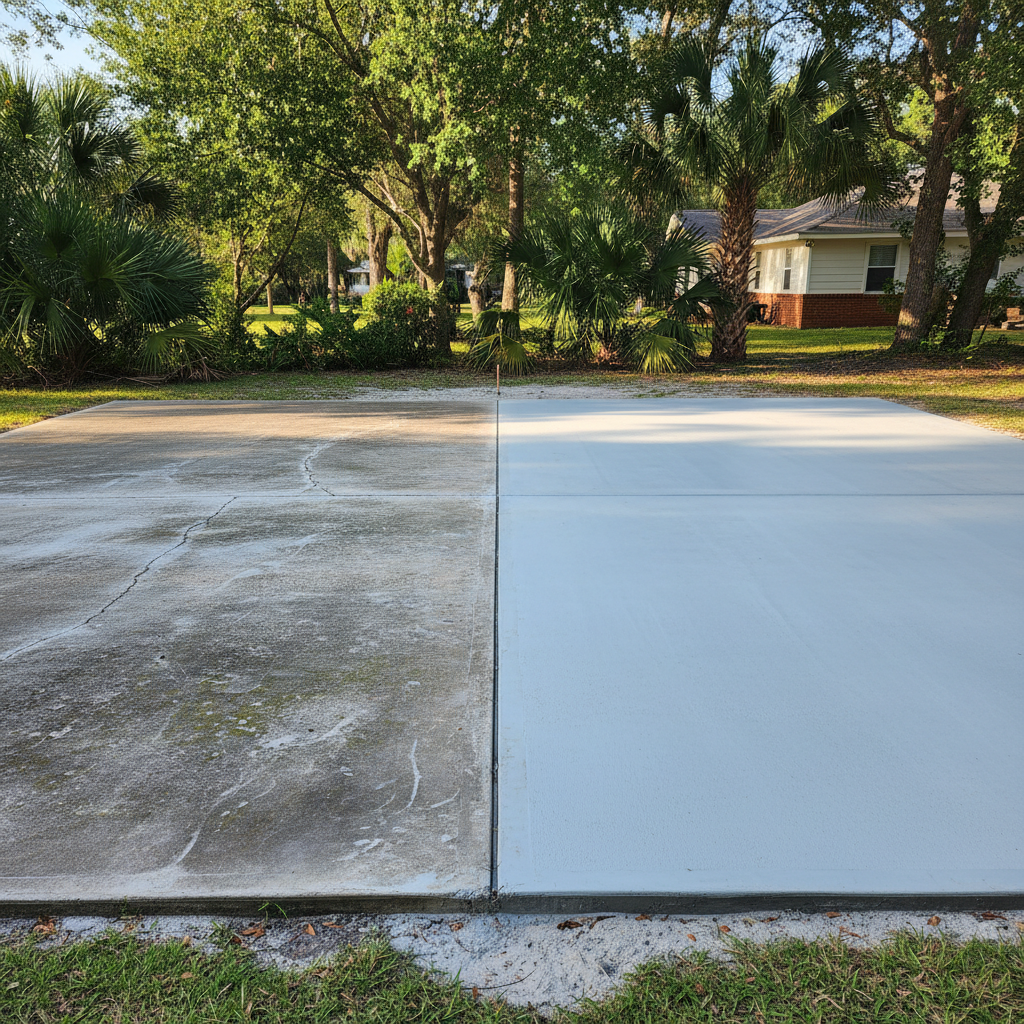
Alright, so you've got some concrete flatwork around your place – maybe a driveway, a patio, or a walkway – and it's definitely seen better days. Cracks are showing up, maybe some pitting, or it just looks plain tired. Now you're staring at it, probably wondering, "Do I fix this mess, or do I just rip it all out and start fresh?" That's a common question I hear from folks all over Gulfport, from the older homes near the harbor to the newer developments out by the interstate.
There are really two main paths here: concrete repair and resurfacing, or a full tear-out and replacement. Both have their place, of course, and what's right for you depends on a few things. Let's talk about them.
Concrete Repair & Resurfacing: The 'Fix It' Approach
When we talk about repair and resurfacing, we're looking at solutions like crack filling, patching, and applying an overlay. This isn't just slapping some mud on it, by the way; modern repair materials are incredibly tough. Overlays, for instance, are often polymer-modified cementitious coatings that bond super well to your existing slab, creating a new, fresh surface. We can even stamp or color these overlays to give them a decorative look, which is a neat trick.
- Cost: Generally, this is your more budget-friendly option upfront. You're not paying for demolition, hauling away tons of old concrete, or nearly as much new material. It's usually a fraction of the cost of a full replacement.
- Durability: A good repair, done right, can really extend the life of your concrete. If the underlying slab is structurally sound – meaning it's not heaving, sinking dramatically, or completely shattered – a quality overlay can stand up to our Gulfport weather, the humidity, and even light traffic for years. It won't be quite as strong as a brand-new, properly installed 4-inch slab, but it's surprisingly tough.
- Maintenance: Pretty low. Keep it clean, maybe re-seal it every few years, just like you would with new concrete.
- Appearance: This is where resurfacing truly shines. You can completely change the look of your old, ugly concrete. We can make it look like tile, stone, or just a fresh, smooth slab. It's a real transformation.
The big 'if' here is the condition of your existing slab. If it's got major structural issues – big sections sinking, severe cracking that indicates sub-base failure, or it's just crumbling apart – then repair is kind of like putting a band-aid on a broken leg. It just won't hold.
Full Tear-Out & Replacement: The 'Start Fresh' Approach
This is exactly what it sounds like: we break up and remove all the old concrete, prep the ground, and pour a brand-new slab. It's a bigger job, no doubt about it.
- Cost: This is almost always the more expensive route. You're paying for demolition, disposal, new material, and often more extensive site prep, like compacting the sub-base properly. For a typical driveway, it can easily be double or even triple the cost of a good resurface.
- Durability: This is the gold standard for longevity. When done correctly, with proper sub-base preparation, reinforcement (like rebar or mesh), and a quality concrete mix, a new slab should last 20-30 years, easy. You're getting a fresh start, engineered to handle whatever our coastal Mississippi climate throws at it, from heavy rains to scorching summers.
- Maintenance: Similar to resurfaced concrete – keep it clean, seal it. But you're starting with a fresh surface, so you won't have any underlying issues to worry about.
- Appearance: It's brand new! You get a perfectly smooth, consistent surface. You can still choose decorative options like stamping or coloring, but it's all part of the initial pour.
When is this the right choice? When your existing concrete is truly shot. If it's got deep, wide cracks, sections that have sunk significantly, or if the surface is completely deteriorated and crumbling, replacement is the only sensible option. Sometimes, the old concrete wasn't installed correctly in the first place – maybe no proper sub-base, too thin, or no control joints. In those cases, you want to fix those underlying issues with a new installation.
My Recommendation for Gulfport Homeowners
Here's the deal: for most homeowners in Gulfport, if your concrete has surface-level issues – hairline cracks, minor pitting, or just an outdated look – and the slab itself isn't moving or completely broken up, resurfacing is often the smarter choice. You save a good chunk of money, get a fantastic new look, and extend the life of your concrete without the massive disruption of a full tear-out.
However, if you've got major structural problems, like severe sinking due to our often-sandy, shifting soils, or if your concrete is just disintegrating, then bite the bullet and go for a full replacement. It's a bigger investment, but it's the only way to get a truly long-lasting solution that won't give you headaches down the road.
The best way to figure it out? Have someone who knows concrete take a look. We do this kind of assessment all the time at New Look Concrete Solutions. We'll tell you honestly what we think is the best path forward for your specific situation. Don't guess; get an expert opinion before you spend your hard-earned money.