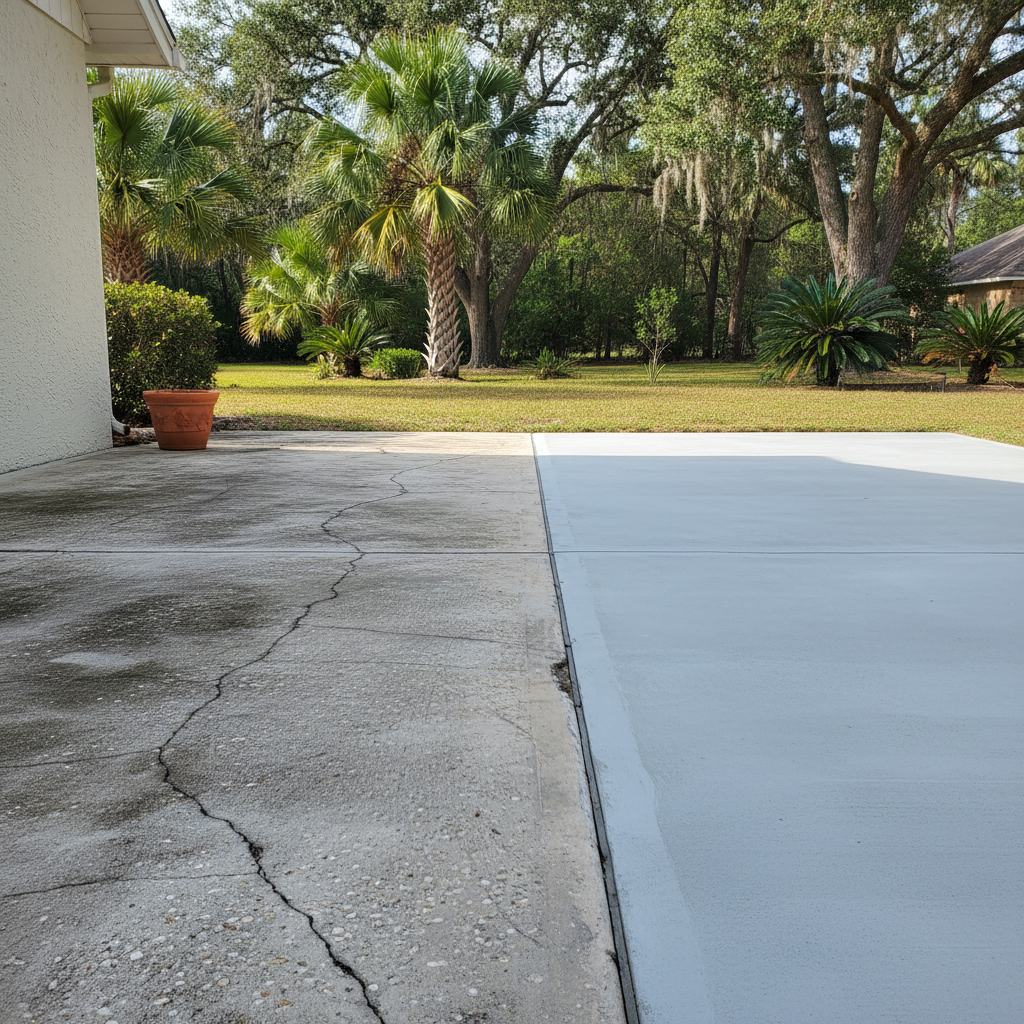
Alright, let's talk about that new driveway, patio, or walkway you've been thinking about. You've basically got two main choices for flatwork: traditional poured concrete or concrete pavers. Both have their place, sure, but here in Gulfport, with our particular climate and soil, one usually comes out ahead. I'll lay out what I've seen over the years so you can make a smart decision.
Poured Concrete: The Old Reliable
Poured concrete is probably what pops into your head first. It's that solid, continuous slab you spot everywhere. It's been around forever for a good reason, and it's still a decent choice for plenty of folks.
- Cost: Generally, poured concrete costs less up front. You're paying for materials, the labor to pour and finish it, and maybe some rebar or mesh. It's a pretty straightforward job, which helps keep that initial price tag down.
- Durability: A well-poured, properly cured concrete slab is tough stuff. It can handle heavy loads, and if it's got the right control joints, it'll last a good long while. But here's the catch for us: our clay soil, whether you're in North Gulfport or even closer to the coast, tends to shift. When that soil moves, a rigid concrete slab cracks. It's not a question of *if*, but *when*. Once it cracks, that's it; that flaw is permanent.
- Maintenance: Pretty low, honestly. You might want to seal it every few years to protect it from stains and moisture, but other than that, it's mostly just sweeping and an occasional pressure wash. If a crack does show up, you can try to patch it, but those patches rarely blend in perfectly.
- Appearance: It's functional. You can get it broom-finished for traction, or smoothed out. You can even stamp it or stain it for a decorative look — which New Look Concrete Solutions does a lot of, by the way. But a plain gray slab is, well, plain gray. And those cracks? They really hurt the curb appeal.
Concrete Pavers: The Flexible Fix
Pavers are individual, interlocking units made from concrete. They come in all sorts of shapes, sizes, and colors, and we lay them over a prepared base of gravel and sand. This is where I see a lot of homeowners getting better long-term value, especially around here.
- Cost: Pavers usually cost more upfront than poured concrete. The materials themselves can be pricier, and the installation process takes more labor. There's more prep work with the base, and each paver has to be laid one by one.
- Durability: This is where pavers really shine, particularly for Gulfport homeowners. Because they're individual units, they're flexible. When our ground shifts — and it will — the pavers can move right along with it. You won't end up with those big, ugly, structural cracks you see in a solid slab. They're incredibly strong, too, often rated for much higher loads than typical concrete.
- Maintenance: Also pretty low. You'll want to sweep them regularly and occasionally re-sand the joints to keep them tight. Weeds can sometimes sprout between them if the joints aren't maintained, but that's usually an easy fix. The best part? If a paver gets stained or damaged, you can simply pop out the bad one and replace it with a new one. Try doing that with a cracked concrete slab, right?
- Appearance: This is another huge win for pavers. The design options are endless. You can create intricate patterns, borders, and color combinations that you just can't achieve with a single pour. They add a real custom, high-end look to any property. Think about how good a paver patio looks compared to a plain concrete one. It just elevates the whole space.
My Recommendation for Gulfport, MS
Look, I'm not going to tell you poured concrete is always bad. For some applications, especially very large, utilitarian areas where budget is the absolute top priority and appearance isn't critical, it can work. But for most residential flatwork — driveways, patios, walkways — here in Gulfport, I'm going to lean towards concrete pavers every single time.
Why? Our soil. The constant moisture, the clay, the way things settle and shift over time. Poured concrete just can't handle that movement without cracking. Pavers, with their interlocking, flexible design, are built for it. They're an investment, yes, but they're an investment that pays off in durability, ease of repair, and superior aesthetics that last.
You'll spend a little more upfront, but you'll save yourself headaches and potentially costly repairs down the line. Plus, the curb appeal and functionality you get from a well-installed paver system are just unmatched. If you're looking for something that's going to stand up to our Gulf Coast conditions and look great for years, pavers are the way to go.
Ready to Talk About Your Project?
If you're still weighing your options or want to see some examples of what's possible, give us a call at New Look Concrete Solutions. We're happy to walk you through the specifics for your home and help you decide what's best for your budget and your vision.