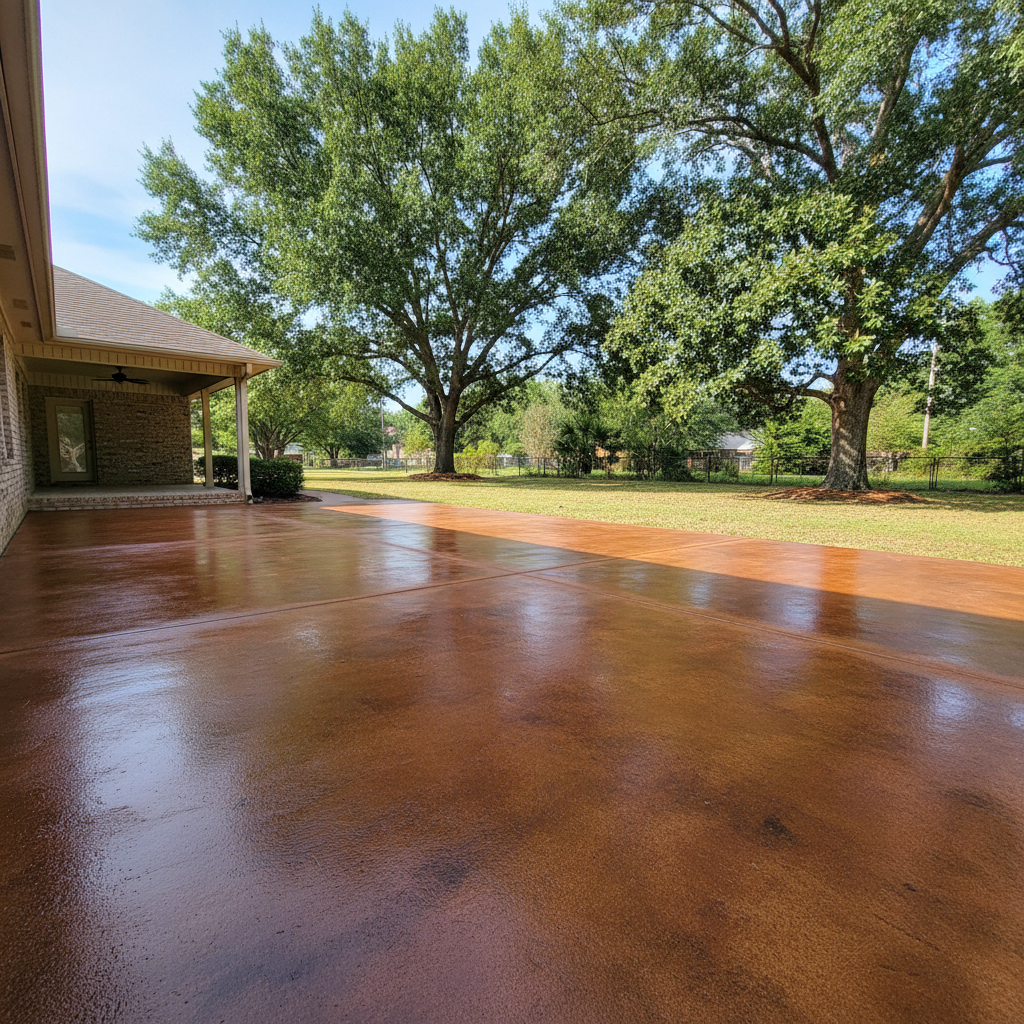
So, you've got some gorgeous stained concrete, right? Maybe it's your patio, a walkway, or even your indoor floors. That's a smart choice for durability and style, especially down here in Gulfport. But just like anything else, it's not a 'set it and forget it' deal. You've got to take care of it if you want it to keep looking sharp and last for years, particularly with our coastal weather.
Make Your Stained Concrete Last Longer
The biggest thing you can do to make your stained concrete last is protect that sealer. Think of the sealer like the clear coat on your car; it takes the beating so the color underneath stays safe. Here in Gulfport, we're dealing with a lot of sun, humidity, and sometimes heavy rain. All of that can be tough on sealers, no doubt.
- Re-seal when it needs it: This is probably the most crucial step. For outdoor concrete, especially areas that get direct sun all day, you'll likely need to re-seal every 2-3 years. Indoor concrete can go much longer, maybe 5-7 years, depending on how much foot traffic it sees. How do you know it's time? We'll get to that in a bit.
- Use mats and rugs: For high-traffic areas, both inside and out, throw down a mat. It's simple, but it saves the sealer from constant abrasion. For instance, if you've got a stained concrete entryway, a good rug will prevent wear patterns from forming.
- Protect from furniture: If you've got outdoor furniture, put felt pads or rubber caps on the legs. Dragging chairs around is a quick way to scratch and dull your finish, and who wants that?
- Avoid harsh chemicals: Stick to cleaners made specifically for sealed concrete or just plain old mild soap and water. Anything too acidic or alkaline can strip the sealer right off.
Regular Upkeep: Keep it Clean
This isn't rocket science, but consistent cleaning makes a huge difference. You're not just making it look good; you're preventing grit and grime from slowly eroding your sealer over time.
- Sweep or blow regularly: For outdoor areas, especially if you're near a lot of live oak trees dropping leaves and pollen, sweep or use a leaf blower weekly. Dirt and sand act like sandpaper underfoot, you know?
- Hose it down: For patios and driveways, a good rinse with a garden hose can do wonders. If you've got a pressure washer, use it carefully on a low setting (around 1200-1500 PSI) with a wide tip, and keep the nozzle moving. Don't blast too close or you'll damage the sealer, that's for sure.
- Mop indoors: For interior stained concrete, a dust mop or a damp mop with a pH-neutral cleaner is usually all you need. Don't use a ton of water; you just want to clean, not flood the floor.
- Spot clean spills immediately: Especially things like oil, grease, wine, or anything acidic. The longer it sits, the more likely it is to stain or etch the sealer.
Trouble Signs to Watch For
You'll start to see signs when your stained concrete needs some attention. Don't ignore these; catching them early can save you a bigger headache later, believe me.
- Dull spots or fading color: This is the most common sign. If your concrete used to have a nice sheen and now it looks dull, or the color seems less vibrant in certain areas, your sealer is wearing thin. This is especially true in areas that get a lot of sun, like a south-facing patio in Gulfport.
- Scratches or scuff marks: If you're seeing more than just superficial marks, it means the sealer isn't protecting the stain anymore.
- Peeling or flaking: This usually means the sealer wasn't applied correctly, or it's just completely failed. You might see it lifting off the concrete in small patches. This is more common with topical sealers than penetrating ones, by the way.
- Water absorption: Here's a simple test: pour a small amount of water on a spot. If it beads up nicely, your sealer is still doing its job. If it soaks in and darkens the concrete, that sealer is gone, and you need to re-seal ASAP.
When to Call a Pro
Look, I'm all for homeowners doing what they can, but some things are best left to the pros. When it comes to stained concrete, knowing when to call us can save you money and headaches in the long run.
- Extensive peeling or flaking: If you've got widespread sealer failure, especially peeling, it often means the old sealer needs to be completely stripped before a new one can be applied. That's a messy, labor-intensive job that requires specific chemicals and equipment. Trying to just put new sealer over old, failing sealer is a recipe for disaster.
- Deep stains or etching: If you've got a stubborn oil stain that won't come out, or an acidic spill has etched the concrete itself, you might need professional help. We have specialized cleaning agents and techniques to address these issues without damaging the underlying stain.
- Color fading or blotchiness: Sometimes, if the sealer has been gone for too long, the actual concrete stain can start to fade unevenly. In some cases, we can re-apply a translucent stain or tint the sealer to bring the color back to life. This takes a good eye and experience to match, which we have.
- You're just not sure: If you're looking at your stained concrete and thinking,