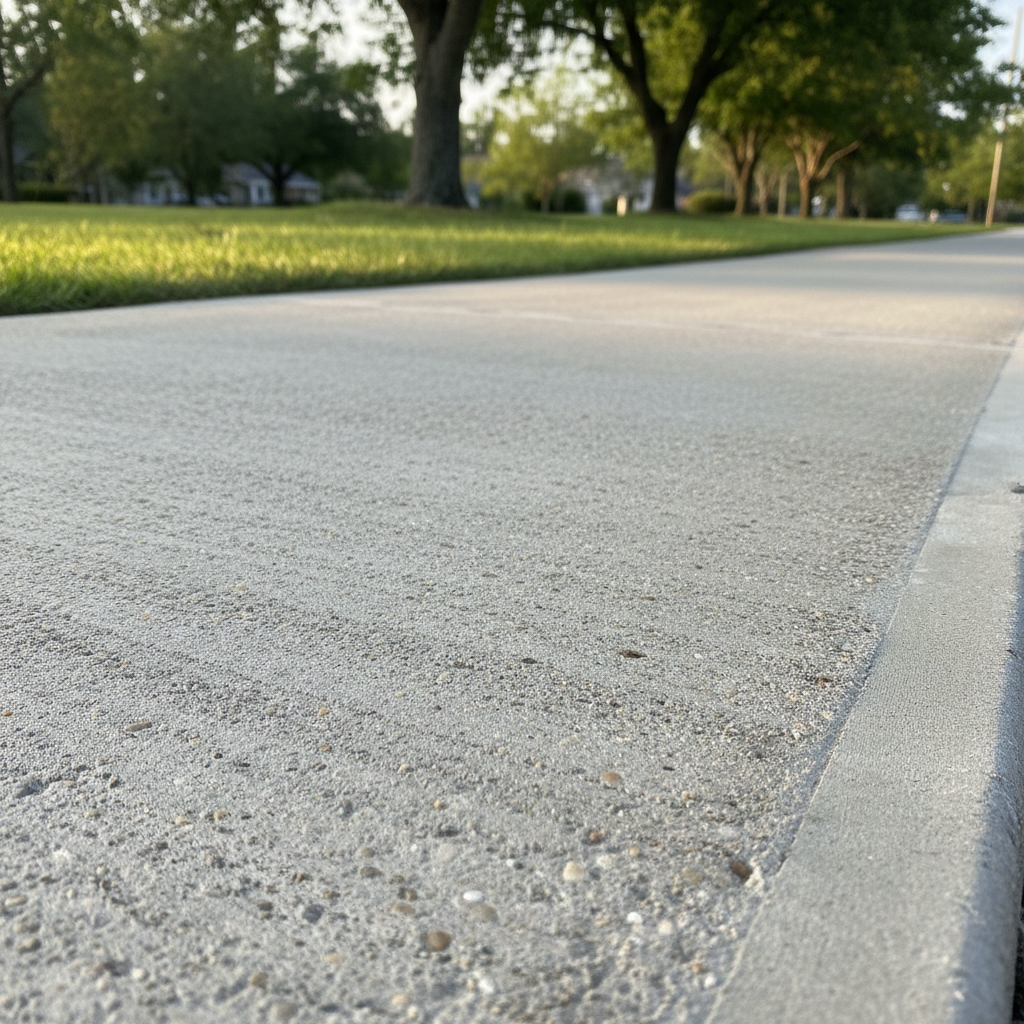
What's causing my sidewalk to crack and lift, especially near trees?
Alright, let's talk about those cracks and lifts, because I see 'em all the time, especially around older homes in areas like the Bayou View neighborhood. Most often, it's tree roots. Those live oaks and magnolias we love so much? Their roots are strong, and they're always looking for water. As they grow, they push up against your concrete, causing it to crack, heave, and sometimes even completely break apart. It's not just roots though; sometimes it's poor sub-base preparation during the original installation. If the ground wasn't properly compacted or if there wasn't a good layer of gravel underneath, the soil can shift and settle, taking your concrete with it. Then there's our famous Gulf Coast soil – it's often a mix of clay and sand, which expands and contracts with changes in moisture, putting stress on any rigid surface like a sidewalk. Pretty annoying, right?
How can I prevent future cracking and shifting after a repair or new installation?
Prevention is key, and it starts with a good plan. If tree roots are the main culprit, you've got a few options. Sometimes, we can install a root barrier. This is a physical barrier that directs roots downwards, away from your sidewalk. It's not always feasible or effective for massive, established trees, but it's worth discussing. When we're doing new installations, or even major repairs, we make sure the sub-base is prepped right. That means proper excavation, compacting the soil, and laying down a good, stable aggregate base. We also use control joints – those saw cuts you see in sidewalks. They aren't just for looks; they're designed to create weak points in the concrete so that if it's going to crack, it cracks in a controlled, less noticeable line. Expansion joints, usually made of a fiber board, are also critical where the sidewalk meets a house or another slab, allowing for movement without damage. Good drainage is also a big one; standing water can erode the sub-base over time, so we always make sure the sidewalk has a slight slope to shed water.
Is it better to repair a section of my sidewalk or replace the whole thing?
That's a question I get a lot, and honestly, it depends on how bad the damage is. If you've got a single, isolated crack or a small section that's just slightly lifted, a repair might be a good option. We can sometimes lift and level sections using methods like mudjacking or polyjacking, which inject material under the slab to raise it. For smaller cracks, patching or sealing can work. But if you've got widespread cracking, multiple sections heaving, or significant structural damage, especially from those aggressive tree roots, then a full replacement of that section or even the entire sidewalk is usually the more cost-effective and long-lasting solution. Trying to patch up a fundamentally unstable sidewalk is like putting a band-aid on a broken bone – it just won't hold. We'll always give you an honest assessment of what makes the most sense for your situation and budget.
What's the deal with drainage? How does it affect my sidewalk, and what can be done?
Drainage is huge, especially here in Gulfport where we get our fair share of rain. Poor drainage can absolutely wreck your sidewalk over time. When water sits on or around your concrete, it can seep underneath, saturating the soil and weakening the sub-base. This leads to settlement, cracking, and even erosion. In winter, if we get a cold snap, that water can freeze and expand, causing even more damage. We always make sure new sidewalks are installed with a slight slope, usually a quarter inch per foot, to direct water away from your home's foundation and off the concrete itself. If your existing sidewalk has drainage issues, we might look at adding a channel drain, regrading the surrounding landscape, or even installing French drains to divert water. Sometimes, just cleaning out clogged gutters can make a big difference if water is constantly cascading onto your sidewalk. It's a simple fix, but often overlooked.
How long does a typical concrete sidewalk last in our Gulfport climate?
A well-installed concrete sidewalk, done right by folks like us at New Look Concrete Solutions, should last you a good 20 to 30 years, sometimes even more. But that's with proper installation and a little bit of maintenance. Our Gulfport climate, with its high humidity, heavy rainfall, and occasional extreme heat, definitely puts concrete to the test. The constant expansion and contraction from temperature swings, combined with moisture, can accelerate wear and tear if the concrete isn't properly mixed, cured, and jointed. Tree roots, as we talked about, are another big factor. If you've got good drainage, a solid sub-base, and quality concrete that was cured correctly, you're looking at a long lifespan. Skimp on any of those, and you'll be calling us back sooner than you'd like.
Do I need a permit for sidewalk repair or replacement in Gulfport?
Good question, and the answer is usually yes, especially if you're talking about a significant repair or a full replacement that's in the public right-of-way. If it's your private sidewalk leading up to your front door and it's entirely on your property, you might not need one. But if it's the section of sidewalk that runs along the street, even if it's technically on your property line, the City of Gulfport often considers that part of the public infrastructure. You'll need to check with the City of Gulfport's Planning and Zoning Department or Public Works. It's always best to make that call before starting any work. They'll let you know what permits are required and what codes need to be followed. It saves you a headache down the road, trust me.