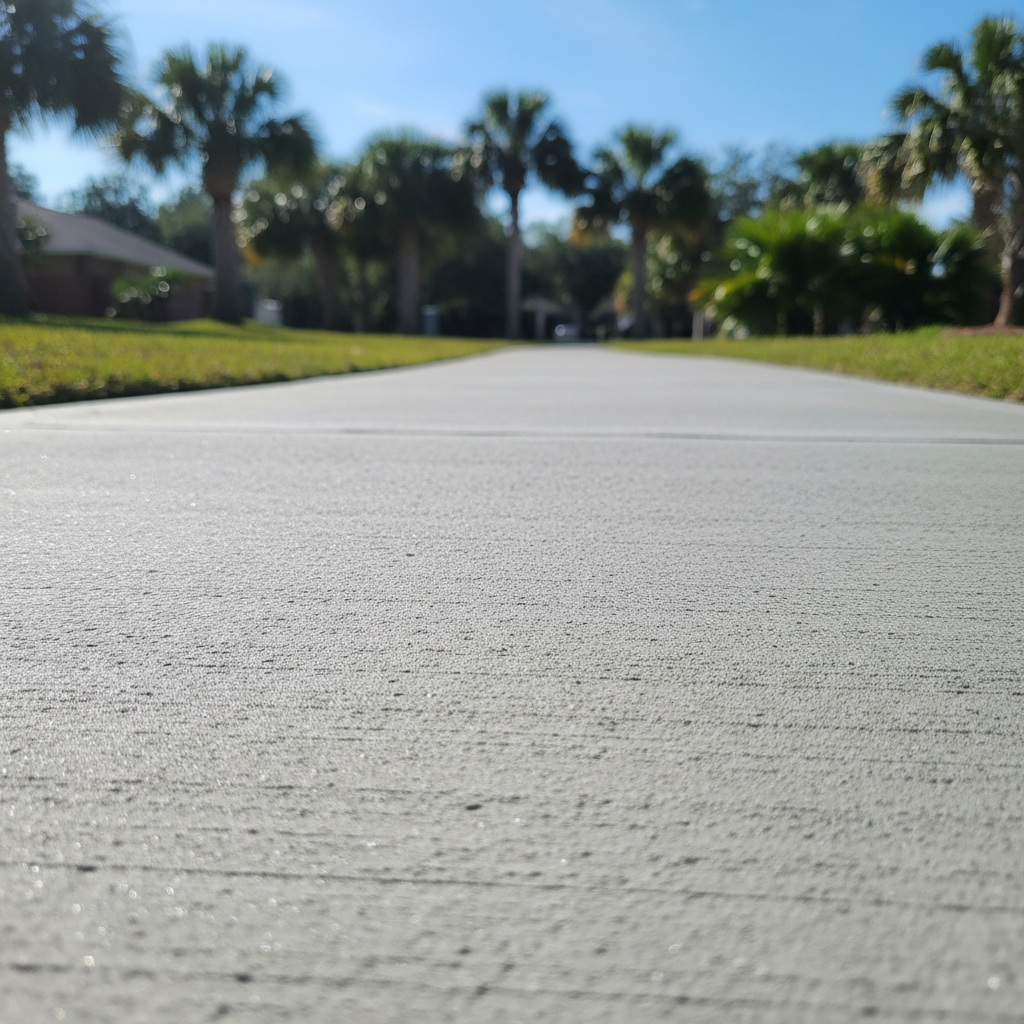
Your concrete sidewalk might seem like a simple thing, right? But honestly, I get a ton of questions about them. Folks here in Gulfport always want to know what to expect, how to keep their sidewalks looking good, and what to do when problems pop up. So, I figured I'd just tackle some of the most common questions I hear. Let's dive right in.
Why do concrete sidewalks crack, even brand-new ones?
This is probably the number one question I get asked. Look, concrete cracks. It's not really a question of *if* it will, but *when*. There are a few reasons for this, and it doesn't always mean someone did a bad job. First off, concrete shrinks as it dries and cures. This shrinkage creates tension, and if that tension has nowhere to go, it's going to crack. That's exactly why we put in control joints – those grooves you see every few feet. They're designed to give the concrete a specific spot to crack, usually in a nice straight line, which makes it less noticeable and a lot easier to deal with.
Then there's thermal expansion and contraction. Our Gulfport weather really swings, from hot, humid summers to cooler, damp winters. Concrete expands when it's hot and shrinks when it's cold. Over time, this constant movement can cause cracks, especially if those control joints aren't doing their job, or if the concrete itself is too thin. Tree roots are another big problem around here, particularly with all those old oak trees in neighborhoods like Broadwater. They can lift and crack slabs from underneath, you know?
How long should a concrete sidewalk last in Gulfport?
A well-installed concrete sidewalk – and I mean one with the right mix and proper sub-base preparation – should easily last 20 to 30 years, sometimes even longer. I've actually seen sidewalks in older parts of Gulfport that are 50 years old and still holding up, though they definitely show some wear and tear. The trick is that "well-installed" part. If the ground wasn't properly compacted underneath, if the concrete mix was off, or if it wasn't cured correctly, you're going to see issues much sooner.
Maintenance plays a role too. Keeping heavy vehicles off it, cleaning it regularly, and sealing it every few years can really stretch its life. But even with perfect care, the elements, especially our coastal humidity and those occasional heavy rains, definitely take their toll.
Do I really need to seal my concrete sidewalk?
You don't *have* to, no, but I really, really recommend it, especially here on the Mississippi Coast. Sealing your concrete is kind of like putting sunscreen on your skin or waxing your car – it protects it. A good quality sealer soaks into the concrete, making it less porous. This helps stop water, oil, and other stains from really sinking in. More importantly for us, it protects against moisture damage and those freeze-thaw cycles (even if we don't get many hard freezes, the temperature swings are enough to matter). It also helps resist efflorescence, which is that white powdery stuff you sometimes spot on concrete surfaces.
Sealing also makes your sidewalk easier to clean and helps it look good for longer. I usually tell folks to plan on resealing every 2 to 5 years, depending on the type of sealer and how much traffic the sidewalk gets. It's a small investment that totally pays off down the road.
What's the deal with uneven sidewalk sections? Can they be fixed without replacing everything?
Uneven sections are a common headache, for sure. They're often caused by settling soil, tree roots, or water eroding underneath the slab. Sometimes, you can fix them without a full replacement. We often use a technique called 'slab jacking' or 'concrete leveling.' This means drilling small holes in the uneven slab and then pumping a material – usually a special grout or polyurethane foam – underneath. This material fills any empty spaces and gently lifts the slab right back into place.
It's a great option if the concrete itself is in good shape and not severely cracked. Plus, it's usually quicker and more affordable than tearing everything out and re-pouring. However, if the slab is shattered, or if the underlying problem (like a giant tree root) isn't fixed, then replacement might be the only lasting solution. We'll always check out the situation to give you the best advice for your specific problem.
How much does a new concrete sidewalk cost in Gulfport?
That's like asking how much a car costs – it really depends on a lot of things! But I can give you a general idea. The cost for a new concrete sidewalk is usually figured by the square foot. So, what makes that price go up or down?
- Thickness: A standard residential sidewalk is usually 4 inches thick. If you need something thicker for heavier loads, that'll cost more.
- Reinforcement: Are we using rebar, wire mesh, or fiber mesh? Rebar adds cost but also strength.
- Site preparation: Do we need to remove an old sidewalk? Is the ground level, or does it need a lot of grading and compaction? Removing old concrete and hauling it away definitely adds to the labor and disposal costs.
- Accessibility: Is it easy to get equipment and materials to the site? A tight backyard path is tougher than a front-yard sidewalk, after all.
- Finish: A basic broom finish is standard. If you want something decorative, like stamped or colored concrete, that's a whole different ballgame and will cost more.
- Permits: For public sidewalks, you'll need city permits, which come with their own fees.
Because of all these variables, it's impossible to give you a number without actually seeing the job. That's why we always do a free on-site estimate at New Look Concrete Solutions. We'll come out, measure, look at the site, and give you a clear, itemized quote so you know exactly what you're paying for.
What's the difference between a public sidewalk and a private one? Who's responsible for what?
This is a common point of confusion. Generally, a public sidewalk is the part of the sidewalk that runs along the street, often within the city's right-of-way. Even though it's on your property, the city often has rules about its condition and sometimes even helps with repairs or replacement, especially if it's a major trip hazard. However, the homeowner is typically responsible for maintaining it and keeping it safe.
A private sidewalk is one that's completely on your property, leading to your front door or connecting different parts of your yard. For these, you're 100% responsible for installation, maintenance, and any repairs. It's always smart to check with the City of Gulfport's Public Works department if you're unsure about responsibility for a specific sidewalk section, especially if it's near the street. They can clarify local ordinances and right-of-way lines.
How do I choose the right contractor for my sidewalk project?
Choosing the right contractor is super important. You want someone who really knows what they're doing, especially with our local conditions. Here's what I'd look for:
- Local experience: They should know about our soil types, humidity, and building codes here in Gulfport. Someone from up north might not really get the specific challenges we face.
- Licensing and insurance: Make sure they're properly licensed and insured. This protects you if something goes wrong. Ask for proof!
- References and portfolio: Ask to see examples of their work, especially sidewalks. Talk to past customers if you can.
- Detailed quote: Get everything in writing. The quote should be clear, itemized, and explain what's included (and what's not).
- Communication: Do they answer your questions clearly? Do they seem professional and reliable? Good communication prevents headaches down the road.
Don't just pick the cheapest bid. Quality concrete work isn't cheap, and cutting corners usually means you'll pay more in repairs later. At New Look Concrete Solutions, we pride ourselves on doing the job right the first time, with transparent pricing and good old-fashioned customer service. Your sidewalk is an important part of your home's curb appeal and safety, so make sure you trust it to someone who truly cares.