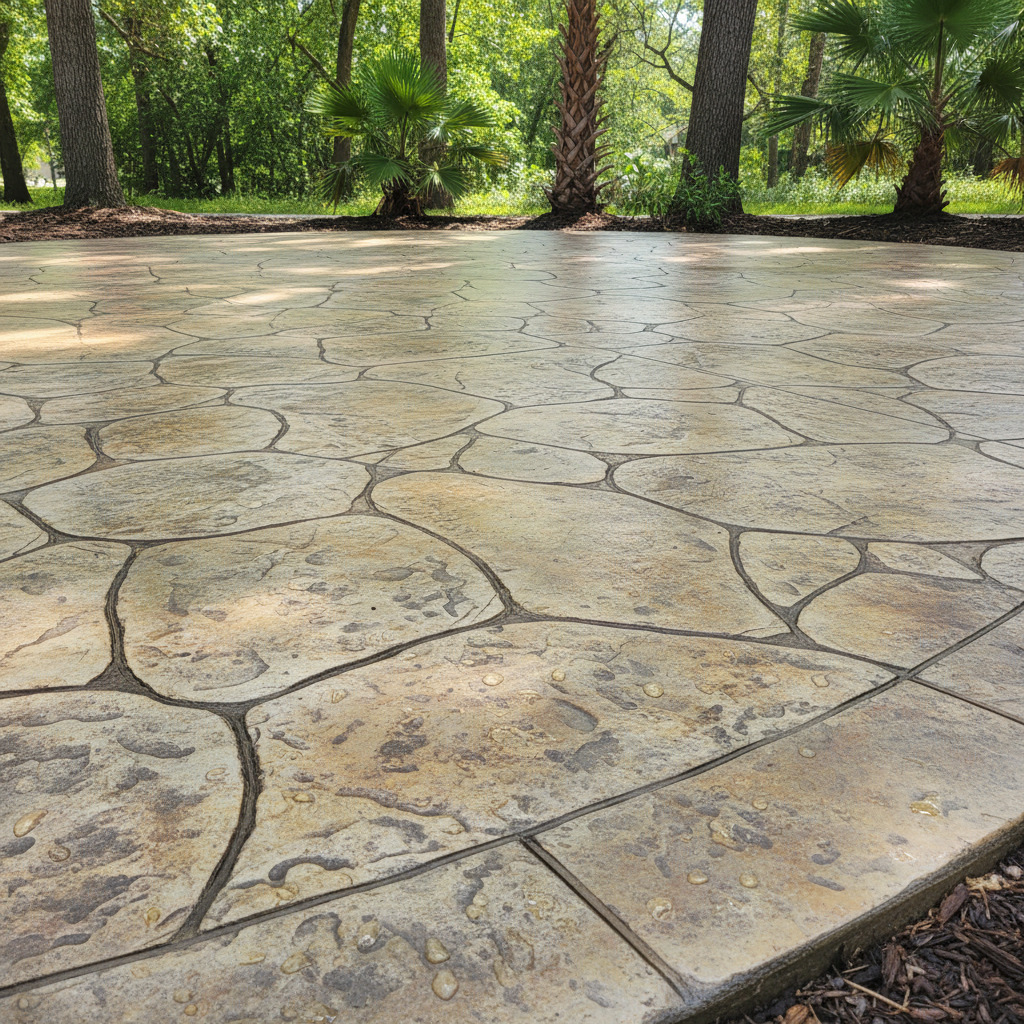
So, you're thinking about some decorative concrete for your place, right? Maybe a cool stamped patio, a stained walkway, or even an epoxy garage floor. It's a fantastic way to spruce up your curb appeal and add some real personality to your home here in Gulfport. But before you jump in, let's talk about what you can realistically tackle yourself and when it's just plain smarter to call in the pros.
Before You Start: Planning & Prep
This is usually where people either set themselves up for a win or a huge headache. Decorative concrete isn't just about pouring gray stuff; it's a mix of art and science. The most important thing to get right, no matter if you're doing it yourself or hiring someone, is the planning.
- What's the Plan? Are you just looking for a simple stain on an existing slab, or do you dream of a full-blown stamped concrete patio with fancy patterns? The complexity really dictates everything here. Staining an existing, well-prepped slab? A handy homeowner might be able to pull that off. But pouring and stamping a brand new 500 sq ft patio? That's a whole different ballgame.
- Surface Condition is Everything: If you're working with concrete you already have, it absolutely must be clean, dry, and solid. Any cracks, flaking, or uneven spots will show right through most decorative finishes. For staining, you'll need to clean it super thoroughly, maybe even acid etch it, just to make sure the stain sticks. Overlays demand even more critical prep — grinding, patching, and priming are often a must. Seriously, don't skip these steps, or your beautiful new finish will fail sooner rather than later.
- Tools & Materials: Do you even have the right tools? For staining, you'll need good sprayers, brushes, rollers, and safety gear. Overlays? You're talking grinders, mixers, specialized trowels, and sometimes even power tools just for surface prep. Renting can get expensive fast, and buying all that gear for a one-time project probably doesn't make much sense.
- Weather Watch: Here in Gulfport, we know all about humidity and those sudden downpours. You simply cannot apply most decorative concrete products in direct sunlight, on a scorching slab, or if rain is in the forecast. High humidity can mess with how long it takes to cure and the quality of the finish. Always check the forecast and aim for mild, dry days.
During the Project: The Nitty-Gritty
Okay, you've planned, you've prepped. Now it's time to get your hands dirty. This is where the DIY vs. Pro line becomes pretty clear.
What You Can Realistically DIY:
For the average homeowner who's got some patience and can follow instructions, these projects are often within reach:
- Basic Staining: If you've got a small, existing concrete slab (like a porch or a little patio) that's in good shape, putting down a simple acid or water-based stain can be a really satisfying DIY. It's mostly about applying it carefully, getting even coverage, and then sealing it. Just remember, acid stains react with the concrete, so the final color can be a bit of a surprise. Definitely test a small, hidden area first!
- Simple Sealing: If you already have decorative concrete that just needs a refresh, applying a new sealer is absolutely a DIY job. Clean the surface well, let it dry completely, and then put down thin, even coats. This is super important for protecting your investment, especially with our coastal weather.
- Epoxy Garage Floors (with a kit): Lots of hardware stores sell epoxy kits made for garage floors. These are designed for DIYers and usually come with pretty clear instructions. The main thing here is meticulous surface prep — cleaning, degreasing, and often acid etching or grinding to make sure the epoxy sticks. Take your time, follow the instructions exactly, and work in sections.
When to Call a Pro (Like New Look Concrete Solutions):
Look, I'm all for saving a few bucks, but some things just aren't worth the headache or the risk of a botched job. This is where a professional concrete contractor really earns their pay.
- Stamped Concrete: This is almost always a job for a pro. It involves pouring fresh concrete, timing the stamping just right (and that's a very narrow window, believe me), applying release agents, and then coloring and sealing. The tools are specialized, the technique requires experience, and if you mess up, you're left with a very expensive, very permanent mistake. Getting the right pattern, texture, and color consistency over a big area is incredibly tough for someone who hasn't done it before.
- Complex Overlays: If your existing concrete is damaged or you want a thicker, more textured decorative finish, you're probably looking at an overlay. These need specific mixing ratios, special application techniques, and often specialized equipment for grinding and leveling the original surface. Getting a smooth, even, and durable finish is just plain hard.
- Large Areas or Intricate Designs: The bigger the area, the more important timing and consistency become. Trying to stain a huge driveway or apply a complex stencil pattern across a large patio by yourself is just asking for trouble. Pros have the crew and the experience to manage these projects efficiently and effectively.
- New Concrete Pours: If you're starting from scratch — pouring a new patio, walkway, or driveway — you absolutely need a professional. Proper sub-base prep, rebar/mesh placement, grading for drainage (super important in Gulfport's flat terrain!), and the actual pouring and finishing of the concrete are highly skilled tasks. A bad pour means cracks, standing water, and a short lifespan.
After the Project: Maintenance & Care
Whether you did it yourself or hired us, taking care of your decorative concrete is key to keeping it looking good and lasting a long time.
- Regular Cleaning: Sweep off debris often. For tougher dirt, use a mild detergent and a stiff brush, then rinse well. Pressure washing is fine, but don't use too high a pressure or hold the nozzle too close, especially on stamped or stained surfaces, as you could damage the sealer or even the concrete itself.
- Re-Sealing: This is probably the most important maintenance step. Most decorative concrete sealers need a fresh coat every 2-5 years, depending on how much traffic it gets, sun exposure, and the type of sealer. You'll know it's time when water no longer beads up on the surface. This, by the way, is a great DIY task, as I mentioned earlier.
- Address Stains Quickly: Oil, grease, rust, or even leaves left to decompose can stain decorative concrete. Clean them up as soon as you spot them.
- Protect from Heavy Loads: While concrete is tough, try to avoid dragging heavy furniture or sharp objects across decorative surfaces, as this can scratch or chip the finish.
Look, decorative concrete is awesome, and it really can transform your outdoor spaces. Just be honest with yourself about your skills, how much time you have, and how complex the project truly is. Sometimes, a little DIY can save you money, but other times, calling in a local pro like New Look Concrete Solutions will save you a whole lot of grief and make sure you get a beautiful, lasting result you'll love for years.