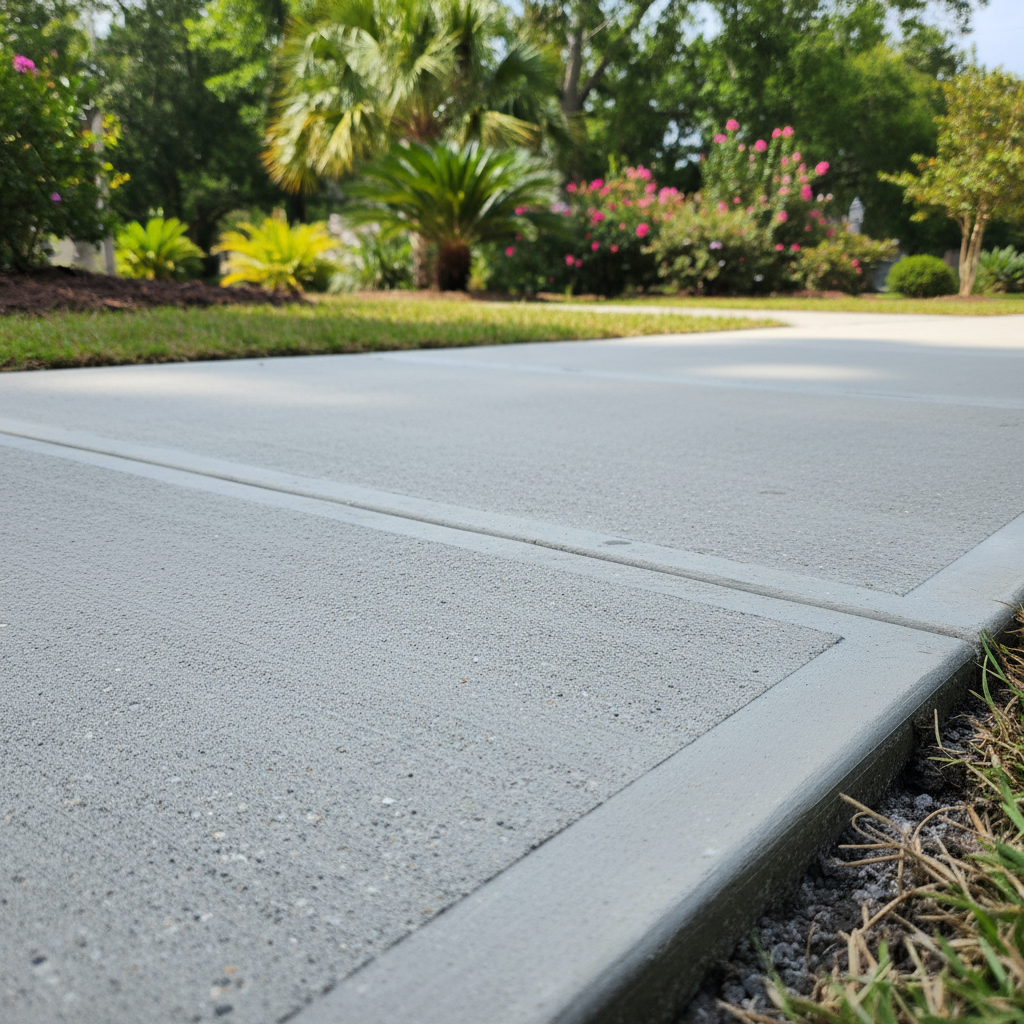
Alright, so you've got a concrete sidewalk, or maybe you're just thinking about putting one in. Either way, you probably have some questions. I hear 'em all the time when I'm out on jobs around Gulfport, from Bayou View straight to the beachfront. Folks want to know what's what with their concrete, and honestly, who can blame them? It's a big investment, after all, and you want it done right and built to last. So, I figured I'd pull together some of the most common questions I get asked, and give you the straight scoop.
What's the best way to keep my concrete sidewalk clean without messing it up?
This is a big one, especially with our humidity and all the green stuff that just loves to grow around here. For general cleaning, a good old pressure washer is definitely your friend. Just don't go crazy with the super-high pressure tips right up close, okay? That's especially true if your concrete is older or has a decorative finish. You could etch it or even chip it if you're not careful. Start with a wider fan tip and keep some distance. For tougher stains, like mildew, a mix of bleach and water (about 1 part bleach to 3 parts water) works wonders. Apply it, let it sit for 15-20 minutes, then rinse thoroughly. Always test a small, out-of-the-way spot first, just to be safe. And wear gloves, obviously. For oil or grease, a good degreaser specifically made for concrete usually does the trick. Try to get to those stains fast, before they really soak in.
How often should I seal my concrete sidewalk, and what kind of sealer should I use?
You know, sealing is one of those things a lot of folks skip, but it makes a huge difference, especially down here in Gulfport. I usually tell people every 2-3 years is a good rule of thumb for sidewalks. It protects against moisture, stains, and helps prevent surface spalling from our freeze-thaw cycles (even though we don't get many, it still happens). As for what kind, well, it really depends on what you're looking for. Acrylic sealers are popular because they're affordable and give a nice look, often enhancing the color. Penetrating sealers, like silanes or siloxanes, don't change the concrete's look but offer excellent protection by soaking deep into the pores. If you've got decorative concrete, you'll want to make sure the sealer is compatible with your finish. I always recommend talking to a pro or checking with your concrete supplier to make sure you're getting the right stuff for your specific sidewalk.
My sidewalk has small cracks. Are these serious, or just cosmetic?
Ah, the dreaded cracks. Look, concrete cracks. It just does that. Small, hairline cracks, especially if they're not growing or causing unevenness, are often just cosmetic. We call 'em shrinkage cracks, and they happen as the concrete dries and cures. Usually, they're not a structural issue. The problem starts when cracks get wider than about a quarter-inch, or if one side of the crack is significantly higher or lower than the other. That's when you've got a trip hazard, or it could point to a problem with the subgrade, like soil settlement. Here in Gulfport, with our sandy soils and heavy rains, subgrade issues are definitely something we keep an eye on. If you're seeing those bigger, uneven cracks, it's time to get someone out to take a look. Please, don't let 'em get worse.
Can I prevent weeds from growing through my sidewalk cracks?
You bet you can, and you absolutely should! Weeds don't just look bad; their roots can actually widen cracks over time, turning a small problem into a much bigger one. The best defense is a good offense, right? First, pull out any existing weeds, roots and all. Then, you can use a crack filler or sealant designed for concrete. This fills the gap and creates a barrier. Another option is to use a weed killer specifically for paved areas. Just be careful with runoff if you have plants nearby you want to keep. Regular sweeping and blowing debris off your sidewalk also helps, because if dirt and organic matter build up in those cracks, it gives weed seeds a perfect place to germinate. It's an ongoing battle, but totally winnable.
What's the deal with expansion joints? Are they really necessary?
Absolutely, 100% necessary. Think of expansion joints (sometimes called control joints or isolation joints) as the concrete's pressure release valves. Concrete expands and contracts with temperature changes. Without these joints, all that stress builds up, and the concrete will crack in unpredictable ways. Those straight lines you see cut into sidewalks? Those are control joints, designed to create weak points so the concrete cracks *there* instead of randomly. Isolation joints are full-depth and separate the sidewalk from other structures, like your house or driveway, so they don't push against each other. Any reputable contractor, like us at New Look Concrete Solutions, will make sure your sidewalk has proper jointing. It's critical for longevity.
My sidewalk is stained from rust. How do I get rid of it?
Rust stains are a real pain, especially if they've been sitting there for a while. Regular cleaning methods usually won't even touch 'em. You'll need a specific rust remover designed for concrete. These products contain acids that react with the rust to dissolve it. Follow the product instructions carefully, as some are stronger than others and might need diluting. Always test in an inconspicuous area first, and make sure to rinse thoroughly after application. Some of these can be pretty potent, so protect nearby plants and wear your safety gear. If it's a really deep or widespread stain, sometimes a professional cleaning with specialized equipment is the only way to get it completely gone without damaging the concrete.
How long does a typical concrete sidewalk last in Gulfport?
A well-installed concrete sidewalk, properly maintained, can easily last 20 to 30 years, sometimes even longer. I've seen some sidewalks around Gulfport that are pushing 40 or 50 years old, still doing their job. Key factors are good preparation of the subgrade, using the right concrete mix for our climate, proper installation techniques (like those expansion joints we talked about), and consistent maintenance. That means regular cleaning, sealing, and addressing any small cracks or issues before they become big ones. If you skimp on any of those steps, you're looking at a much shorter lifespan and more headaches down the road. It's like anything else; you get out what you put in.